

Veterans face sleep apnea at more than double the rate of civilians, hitting 21% versus just 9% in the general crowd. That relentless exhaustion creeps in, turning quiet nights into battles with veteran’s symptoms like gasping breaths and foggy days.
We see it all too often in VA disability claims, where proving service connection demands more than just charts. Medical evidence from Veterans Affairs helps, sure, but those personal stories? They seal the deal.
From our experience guiding thousands through these hurdles, a strong sample spouse letter for sleep apnea flips the script on denials. This guide hands you the blueprint: spot key
details, craft compelling narratives, and stack your case for the benefits you deserve.
Quick tip: Check our take on the nexus letter for sleep apnea from last time. Up next, grab the va form 21-10210 pdf for lay statements. And don’t miss our pillar on the VA secondary claim form to tie it all together.
Key Points
- A strong VA sleep apnea claim needs clear medical evidence plus simple, honest statements from spouses and buddies.
- A spouse letter helps show real changes in sleep patterns, mood, and daily responsibilities.
- Buddy letters and lay statements explain what others have seen over time.
- Medical records, a nexus letter, and consistent details guide reviewers toward an accurate decision.
- Building a complete file gives VA staff the information needed to understand the full impact of the condition.
Understanding Sleep Apnea — Symptoms, Service Connection & Impact on Veterans’ Daily Life
Let’s break down this medical condition in plain terms. Obstructive sleep apnea means your breathing stops and starts repeatedly during sleep. For veterans, these sleep issues often have roots in active duty.
Imagine: John slowly began experiencing loud snoring during deployment. His assigned duty locations exposed him to pollutants that aggravated his breathing. This is a common seed for a service-connected condition.
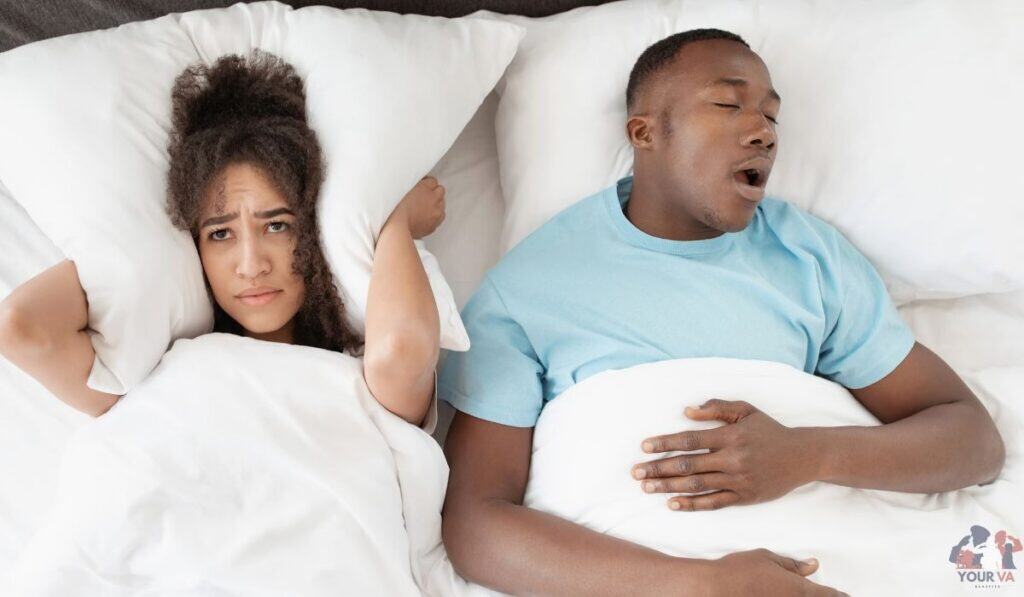
The classic sleep apnea symptoms extend far beyond loud snoring. Think trouble sleeping, gasping at night, and crushing daytime fatigue. This excessive daytime fatigue rewires your daily life.
You might struggle with difficulty concentrating at work or miss group therapy sessions because you’re too exhausted. Mood swings can strain your family life. It’s a brutal cycle where disrupted sleep patterns fuel mental strain.
Here’s a critical point for your VA disability benefits claim. Sleep apnea secondary to another service-connected issue is very common.
For instance, a veteran with PTSD or service-connected sinusitis can develop apnea. An in service injury might lead to weight gain, another trigger. The VA needs to see this link.
Why is evidence so vital now? Veterans Affairs updated the VA rating schedule for sleep apnea in 2025. Ratings for those using a CPAP machine changed. Proving a solid service connection is more important than ever for a successful claim.
You must show how your veteran’s symptoms started in military service and persist today.
How Symptoms Dominate Daily Life
At Home: Disrupted sleep means no one rests. A spouse moves to another room. You forget to pay bills. Patience wears thin.
At Work: Excessive daytime fatigue causes mistakes. You nod off at your desk. Projects lag.
For Health: You might skip attending group therapy sessions due to sheer exhaustion. Disrupted sleep patterns worsen other mental health conditions.
The goal is to show the VA a complete picture of your veteran’s daily life. Every detail matters.
Want To Increase Your Rating?
The Power of Buddy Letters and Lay Statements in Strengthening Sleep Apnea VA Claims
Medical records prove a diagnosis. Lay statements prove your life. A buddy letter (or lay witness statement) is a written account from someone who knows you. This could be a fellow service member, your spouse, or a close friend.
These VA disability claims tools are powerful because they describe what a machine cannot: your real-world struggle.
What Makes a Lay Statement So Convincing?
Think about it. A sleep study snapshot lasts one night. Your spouse has witnessed 1,000 nights. They have personally witnessed the chronic disrupted sleep, the loud snoring, and your battle with daytime fatigue. This testimony fills gaps.
For example, they can describe how your trouble sleeping began after that in service injury. They provide context pure medical records lack.

Crafting the Most Effective Buddy Letters
We see the most effective buddy letters share key traits. They are specific, honest, and clear. Instruct your buddy to use phrases like “to the best of my knowledge” for credibility. Their personal statement should focus on changes they’ve seen.
Scenario 1:
A Fellow Service Member: They can write, “I served with John in Iraq. In 2010, he started snoring loudly in the barracks. Our whole unit noticed his excessive daytime fatigue on patrol. This was a direct change from his earlier active duty energy.”
Scenario 2:
A Spouse: “I have personally witnessed my husband stop breathing at night for 20 seconds. His mood swings the next day are severe. Difficulty concentrating has made him unable to help our kids with homework.
After a poor night’s sleep, he has begun throwing things in frustration, which he never did before service.”
These statements connect sleep apnea symptoms to mental health conditions like anxiety or panic attacks. They can note if fatigue leads you to miss attending substance abuse meetings or attending group therapy sessions.
This shows the VA the profound impact on your daily life.
As Hippocrates said, “It is more important to know what sort of person has a disease than to know what sort of disease a person has.”
Your buddy statement or lay statement does exactly that for Veterans Affairs. It tells the va raters the sort of person dealing with this challenge, making your claim undeniable.
Sample Spouse Letter for Sleep Apnea — Guide with Real-World Examples
Think of a sample spouse letter for sleep apnea as your secret weapon. It translates clinical terms into human experience. This personal statement provides context that medical records often miss.
Under the 2026 VA rating criteria, your spouse’s testimony is more critical than ever to prove “incomplete relief” from treatment.
Your spouse has personally witnessed the nightly struggle, making their account gold for Veterans Affairs. Let’s build one correctly.
Nail the Format First
Always start with the basics: date, the VA claim number, and a formal address. The subject line should clearly state, “Lay Witness Statement in Support of [Veteran’s Full Name].” Open by introducing yourself and your relationship.
A simple phrase like “I have been John’s spouse for 15 years” establishes credibility. We always recommend this formal header; it immediately signals professionalism to va raters.
Detail What You’ve Personally Witnessed
This is the core. In 2026, the VA looks for “treatment effectiveness.” Don’t just say “he has a CPAP.” Describe why the symptoms persist. For instance, “Even with the CPAP, I personally witnessed John stop breathing for 30 seconds.”
Mention if the veteran struggles to wear the mask due to service-connected PTSD, anxiety, or physical scarring. Chart the progression.
Maybe John slowly began experiencing this disrupted sleep after his last deployment. Describe his excessive daytime fatigue and how it manifests. Does he fall asleep helping kids with homework? Has his difficulty concentrating led to errors in paying bills?
Three Common Letter Variations
In our work, we typically see three letters that fit most 2026 claims:
The Ineffective Treatment Letter: Details how symptoms like gasping and fatigue continue despite using a CPAP or oral appliance.
The Comorbidity/Intolerance Letter: Links the inability to use treatment to other service-connected conditions, which is now a primary path to a 50% rating.
The Secondary Condition Letter: Links apnea to a primary condition like PTSD or toxic exposure under the PACT Act.
Connect Symptoms to Daily Life
The VA needs to see the impact. Spell it out. Describe the strain on your family life. Maybe you sleep in separate rooms. Note if daytime fatigue causes short temper or forgets important dates. Mention how mental health conditions seem worse without rest.
You can express your hope that treatment like a CPAP machine will help. Crucially, if a doctor provided a nexus letter or medical opinion, your letter should consistently reflect those same veteran’s symptoms.
This consistency strengthens the service connection for the veteran’s claim.
Here’s a sample spouse letter:
To: Department of Veterans Affairs
Date: January 15, 2026
Subject: Lay Witness Statement for [Veteran’s Full Name], Claim # [VA Claim Number]
My name is [Your Full Name]. I am the spouse of [Veteran’s Full Name] and we have lived together for [Number] years. I write to describe what I have personally seen regarding the severity of his condition and the lack of relief provided by his current treatment.
I first noticed his loud, disruptive snoring after he returned from deployment. Now, I often witness him stop breathing at night. He will gasp for air suddenly. This happens multiple times every week even when he is using his prescribed CPAP machine.
His sleep is constantly disrupted. Despite following treatment protocols, he continues to suffer from severe daytime fatigue and “brain fog.” He often has to remove the CPAP mask because his service-connected PTSD causes him to feel smothered, leading to nightly panic attacks.
This affects our entire family’s life. We sometimes sleep in separate rooms. Because the treatment provides incomplete relief, his exhaustion limits family activities and has put a strain on our relationship. I confirm these observations are true and accurate.
Sincerely,
[Your Signature]
[Your Printed Name]
[Your Contact Information]
Pro tips:
1. Support, don’t replace medical evidence.
2. Use specific examples (e.g., ‘nodded off at dinner’).
3. Consider notarization to strengthen credibility.
Building a Bulletproof Claim — Medical Evidence, Nexus Letters & Additional Support
A successful VA disability claim is like a puzzle. Each piece must fit. Your medical evidence forms the cornerstone, but lay statements complete the picture. A va rater looks for consistency across all documents. Let’s assemble your puzzle.
The Non-Negotiable Foundation: Medical Evidence
You must start with a formal diagnosis. This requires a sleep study from a qualified clinician. Submit these complete medical records with your claim. Include all relevant history. Did you complain of trouble sleeping during your active duty years?
Those old service treatment records are vital. They help demonstrate an in-service injury or the onset of sleep issues. Track your symptoms over time in a journal. This creates a timeline no one can dispute.

The Crucial Link: The Nexus Letter
For a sleep apnea secondary claim, the nexus letter is your linchpin. This is a formal medical opinion from a doctor. It explicitly connects your apnea to a primary service-connected condition. A strong letter doesn’t just state a link; it explains the how and why.
For example, it details how service-connected sinusitis causes airway inflammation or how PTSD medications contribute to weight gain. This letter provides the authoritative link Veterans Affairs needs to grant your service connection.
Weave a Consistent Narrative
Now, layer in your personal statement, buddy statement, and spouse letter. These lay statements must echo the medical evidence. If your sleep study notes hypoxia, your spouse should describe seeing you gasp for air.
If the nexus letter cites aggravation by PTSD, your buddy can recall your disrupted sleep patterns starting after a combat event. This harmony is everything. It shows the va raters a unified, undeniable story of how your veteran’s claim is valid.
Each document supports the other, leaving no room for doubt and paving the way for your VA disability benefits.
Submission Checklist:
- Spouse/Buddy Letters (VA Form 21-10210 or plain paper)
- Medical Records & Sleep Study
- Completed DBQ for Sleep Apnea
- Nexus Letter (for secondary claims)
Final Thoughts
Gathering the right proof makes all the difference. A strong va claim blends solid medical evidence with personal stories from a sample spouse letter for sleep apnea. Together, they paint the full picture for Veterans Affairs, clearly showing that service connection.
Ready to build your best case? Explore more guides and resources right here on our homepage.