

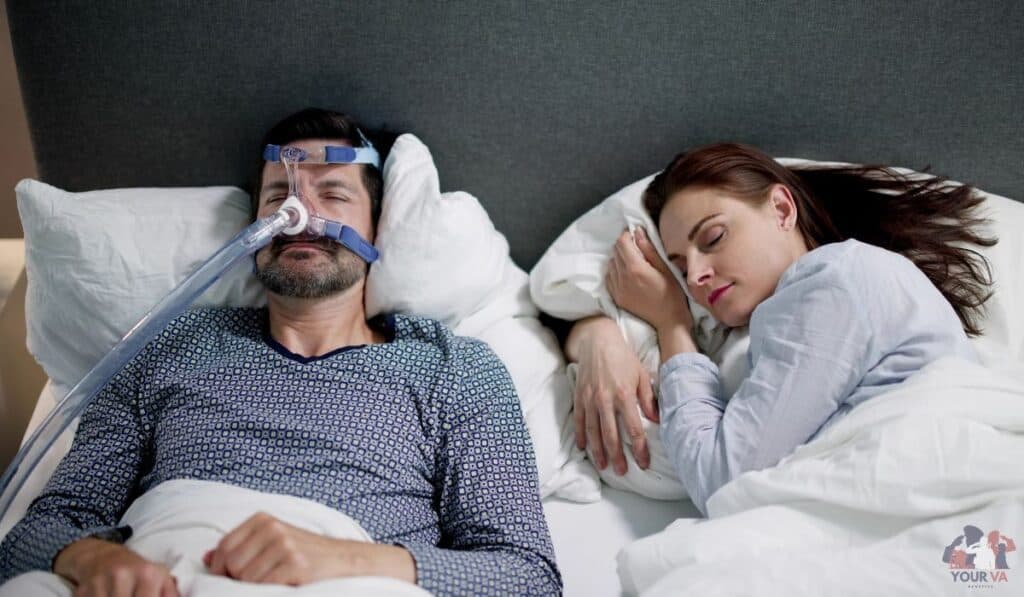
Here’s something that might shock you: veterans face more than double the risk of developing sleep apnea compared to civilians. While only 9% of non-veterans deal with this condition, a staggering 21% of veterans struggle with obstructive sleep apnea.
That’s not coincidence. That’s military service taking its toll.
From our experience, the key to unlocking the VA benefits you deserve for this condition often hinges on one powerful piece of medical evidence: a strong nexus letter for sleep apnea.
Yet when it comes to filing a VA disability claim, too many veterans are denied because they cannot prove the service connection.
This guide is here to explain what it is, how to get one, and how it can strengthen your sleep apnea claim so you can finally receive the VA benefits you’ve earned.
If you’re looking for related resources, we’ve covered the nexus letter in a previous article. Coming up, we’ll share a sample spouse letter for sleep apnea that can support your case.
And of course, our guide on the nexus letter breaks down why it is the cornerstone of nearly every successful claim.
Let’s start.
Key Points
- A nexus letter for sleep apnea is a medical opinion linking your condition to military service.
- To win a sleep apnea claim, you need three things: a sleep apnea diagnosis, an in-service event or service connected disability, and medical evidence proving the connection.
- Claims can be filed as primary or secondary service connection (PTSD, weight gain, chronic pain, etc.).
- The VA values nexus letters most when a qualified medical professional fully reviews military medical records and your full medical history.
- Significant 2026 updates mean continuous positive airway pressure (CPAP) alone is no longer a guaranteed 50% rating for new claims.
- Veterans with existing ratings remain protected via grandfathering, but those filing new or secondary claims must navigate the “Treatment Success” model.
- Filing a VA benefits claim early and organizing your sleep study, sleep test, and treatment history can make the difference.
What Is a Nexus Letter and Why It Matters for Sleep Apnea Claims
Think of a nexus letter as the missing puzzle piece that connects your current sleep condition to your time in uniform. The VA needs proof, and this document delivers it.

The Medical Link Between Service and Sleep Apnea
A nexus letter for sleep is a formal medical opinion written by a qualified medical professional that explains how your obstructive sleep apnea, central sleep apnea, or complex sleep apnea ties directly to your military service.
It’s not just a doctor’s note. This letter for sleep apnea must contain specific language and medical reasoning that meets VA standards.
The VA looks for three critical elements in every successful claim:
- You need a current sleep apnea diagnosis documented through proper testing.
- You need proof of an in-service event, injury, or existing service connected disability.
- You need medical evidence that links these two together.
That third requirement trips up most veterans.
Direct vs. Secondary Claims
Your sleep apnea secondary to other conditions can qualify you for benefits. We’ve seen countless veterans secure ratings through secondary service connection pathways. Someone with PTSD experiences nightmares and hypervigilance that disrupt normal sleep patterns.
Another veteran develops weight gain from knee pain that limits mobility, and that weight gain leads to sleep apnea. Chronic pain forces uncomfortable sleeping positions. Mental health conditions and other mental health conditions create sleep disturbances.
The VA recognizes these connections as valid primary or secondary condition claims when properly documented.
Why Credentials and Records Matter
The VA assigns something called probative value to every nexus letter for sleep apnea. A sleep specialist carries more weight than a general practitioner.
The medical professional must state they’ve thoroughly reviewed your military medical records and veteran’s medical history. Providing military medical records to your doctor strengthens their opinion.
A cardiologist writing about heart-related sleep issues? That earns high probative value. A family doctor writing about the same condition? Less credibility in the VA’s eyes.
Want To Increase Your Rating?
VA Sleep Apnea Claim Changes in 2026: Why You Need to Act Now
The landscape for sleep apnea benefits is shifting fast. Veterans who wait could see dramatically lower compensation.
The Current 50% Rating Is Evolving
For years, most veterans prescribed a CPAP machine automatically received a 50% sleep apnea rating. In 2026, following the 2.8% COLA increase, this is worth $1,132.90 monthly for a single veteran with no dependents.
Under the updated rating schedule, simply using a CPAP won’t cut it anymore for new applicants. The new system evaluates treatment effectiveness.
If your symptoms are “fully managed” or “asymptomatic” by the CPAP, the VA may now assign a 0% or 10% VA disability rating.
That’s a massive hit to monthly disability benefits.
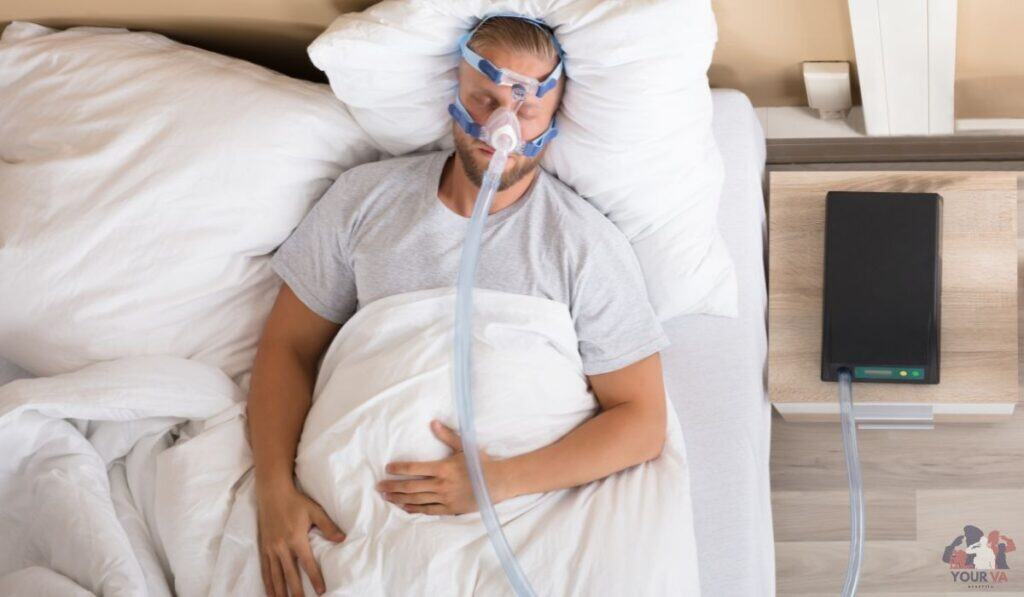
The updated 2026 VA rating criteria focus on whether your treatment actually works rather than just the device you use.
Complete symptom relief with CPAP? Under the new rules, you should expect a lower rating (potentially 0%). Incomplete relief despite treatment? This may qualify for a 10% rating.
Inability to use CPAP due to documented complications or comorbid conditions? That‘s the path to a 50% or even 100% rating.
New Rating Tiers: 0% to 100%
- The 2026 criteria focus on whether your treatment actually works.
- 0% Rating: Asymptomatic with or without treatment.
- 10% Rating: Treatment yields “incomplete relief.”
- 50% Rating: Treatment is ineffective or the veteran is unable to use it due to comorbid conditions.
- 100% Rating: Treatment is ineffective and results in end-organ damage or chronic respiratory failure.
Grandfathering Protects Current Recipients
Good news if you already have a rating. Veterans with approved sleep apnea VA claims are grandfathered under the rules that were in place at the time of their grant.
Your VA disability benefits won’t decrease unless you request an increase or reopen your case, and a medical improvement is shown.
But veterans filing new secondary claims or initial applications in 2026 need to act now to establish their Intent to File.
Stronger Evidence Required Under New Rules
Sleep apnea cases demand more detailed nexus letter documentation in 2026. Your doctor needs to explain why CPAP doesn’t provide adequate relief.
Consider someone with atrial fibrillation whose heart condition interferes with sleep quality despite CPAP use.
Or a veteran with severe GERD where lying flat triggers reflux, making the machine intolerable. PTSD-related mask intolerance is also a major factor that must be documented by a medical professional familiar with your complete medical history.
Take Action Before the Deadline
File your Intent to File today to establish your effective date:
- Gather your sleep study results from the sleep lab.
- Request your complete treatment history showing CPAP compliance or specific difficulties.
- Complete the disability benefits questionnaire (DBQ) with your doctor.
- Submit your VA benefits claim with all supporting medical evidence.
Every month you delay could cost thousands in retroactive pay.
How to Get a Strong Nexus Letter for Your VA Claim
Finding the right provider and knowing what to include can make or break your claim. Here’s exactly how to secure a nexus letter that the VA can’t ignore.
Choosing the Right Medical Provider
Licensed providers with sleep expertise carry the most weight. Board-certified pulmonologists and sleep medicine specialists top the list. Private physicians who’ve treated you for years can write compelling letters since they know your medical history.

Telehealth platforms specializing in VA nexus letters connect you with doctors experienced in VA claims language.
We’ve seen veterans succeed with different provider types. One veteran used their longtime pulmonologist who’d followed their condition for five years. Another worked with a VA doctor willing to provide an independent medical opinion.
The key? Choose someone with credentials in sleep medicine who understands the 2026 rating shifts.
Four Essential Elements Every Letter Needs
A strong nexus letter must contain specific components:
- The provider’s credentials and specialty.
- Confirmation they reviewed your entire C-File (Claims File) and military medical records.
- The magic phrase: your condition is “at least as likely as not” (50% probability or greater) connected to service.
- Medical rationale explaining why this connection exists.
Providing military medical records to your doctor strengthens their analysis. They can reference specific service events and injuries. The letter should mention your formal diagnosis with dates and supporting test results.
Understanding Costs and Where to Look
Expect to pay between $600 and $2,500 for a quality independent medical opinion in 2026. While VA doctors can write letters at no cost, they are often restricted by facility policy.
Private physicians and specialized telehealth services provide faster turnaround times but at a premium.
Some veterans balk at the price tag. Consider this: a 50% rating pays $1,132.90 monthly. A $1,500 nexus letter pays for itself in less than two months.
Check if veteran service organizations in your area offer assistance with costs.
Timing Your Submission Right
Submit your nexus letter with your initial claim to avoid delays. Include supporting documents that strengthen your case. Your sleep study from the sleep lab proving your diagnosis matters. The disability benefits questionnaire completed by your doctor adds detail.
CPAP machine data showing irregular breathing events and compliance rates helps. Documentation of excessive daytime sleepiness affecting your daily life rounds out the package.
Proving Service Connection: Direct and Secondary Sleep Apnea Claims
Building your case requires understanding how sleep apnea connects to service. The path forward depends on whether you’re claiming direct or secondary connection.
Direct Service Connection Strategies
Your sleep apnea began during active service through various factors. Deployment schedules, shift work, and combat stress are all factors. Physical injuries like Traumatic Brain Injury (TBI) or a deviated septum create airway obstruction.
Shift work during military assignments causes chronic circadian rhythm disruption.
Take a Navy veteran who worked rotating watches for eight years. His sleep disorder developed directly from those irregular schedules. Another Marine suffered a combat-related jaw injury that narrowed his airway.
Both successfully claimed sleep apnea as service-connected through direct pathways.
Document everything. Buddy statements describing your snoring or gasping during deployment help. Service medical records mentioning fatigue or sleep complaints matter.

Secondary Connection Pathways
Most successful claims we see in 2026 use secondary service connection.
- PTSD: Causes nightmares and hyperarousal that fragment sleep.
- Chronic Pain: Limits mobility, causes weight gain (as an intermediate step), leading to apnea.
- Rhinitis/Sinusitis: Creates a physical obstruction that makes breathing impossible.
Veterans can prove secondary service connection through these chains. Someone with a current service connected disability for PTSD at 70% may develop severe sleep apnea from the condition.
Building Your Evidence Package
Strong medical evidence separates approvals from denials. Your sleep study results showing apnea severity and oxygen desaturation events provide objective data. CPAP machine compliance reports from the sleep lab demonstrate treatment needs.
Your complete treatment history showing what therapies you’ve tried matters. Buddy statements from spouses describing witnessed symptoms add credibility.
What Medical Professionals Evaluate
Doctors must rule out non-service causes. They examine your complete timeline. Did symptoms appear during or after service?
In 2026, they also consider whether alternative treatments (like mandibular advancement devices or Inspire implants) are needed, as this proves the severity that standard CPAP cannot fix.
When proving the sleep apnea connection, they consider whether mandibular advancement devices or genioglossal nerve stimulation devices might be needed beyond CPAP. These alternative treatments suggest severity that standard therapy can’t control.
The medical professional documents all factors supporting service connection while addressing potential counterarguments the VA might raise.
Final Thoughts
Getting your nexus letter right can transform a denied VA disability claim into approved benefits. The 2026 rating changes make timing critical. File now to lock in current criteria before the window closes.
Your VA benefits depend on strong medical evidence that clearly connects your sleep apnea to service. The VA system doesn’t have to feel impossible when you’ve got expert guidance backing you up.
Ready to build a winning claim? Our coaches provide personalized strategies for your specific situation. Check out our homepage for free resources, success stories, and tools that help you maximize your disability claim.
Your service earned these benefits. Let’s make sure you get them.