Published 30 July 2025
More than two and a half million veterans and service members submit claims each year. But after clicking that final “submit” button, what exactly comes next?
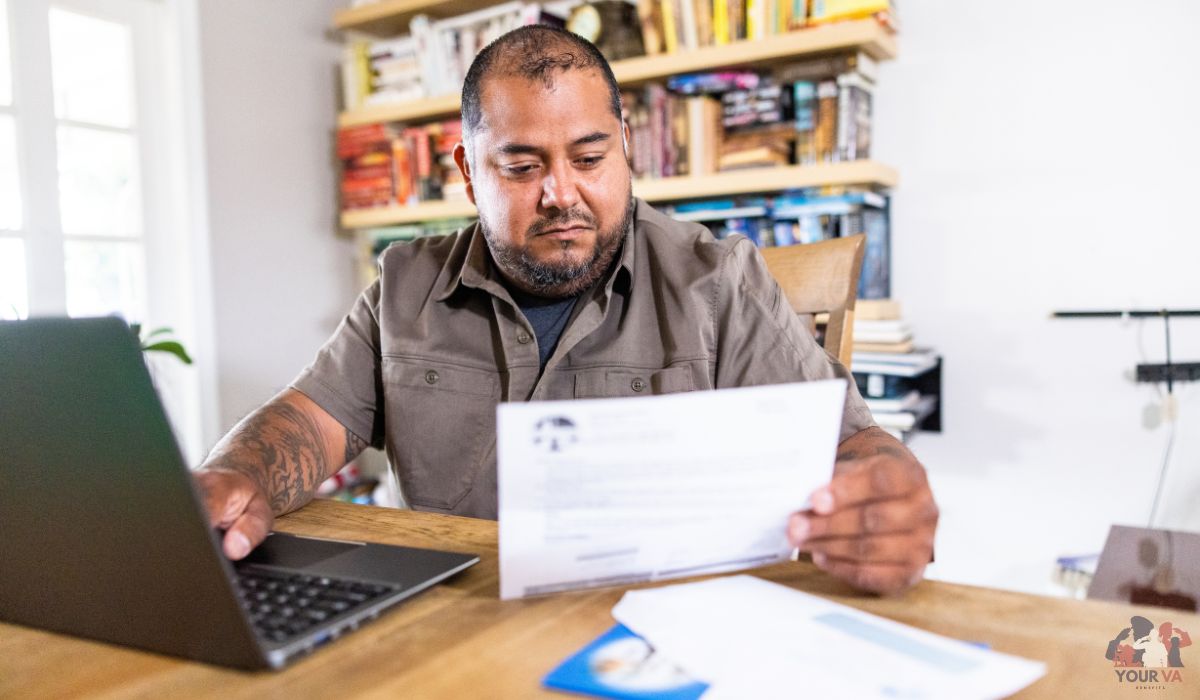
What happens after VA claim submission isn’t always clear, and from our experience, that uncertainty can cause more stress than the paperwork itself.
This guide breaks down the entire VA claim process, step-by-step, from that first confirmation to receiving your decision letter. We’ll show you how to track your VA claim status, what each phase means, and what to expect along the way.
If you just tackled online VA disability claims, great job starting. For those new to the journey, our initial VA disability claims filing guide is essential reading. And once you know this process, watch for our next piece on avoiding common VA disability claim filing mistakes.
Great news – your VA claim is officially in the system! Within about three business days, expect confirmation. The VA assigns a unique claim number immediately. You’ll get this number, plus an acknowledgment, via email or postal mail.
Seeing “Claim Received” online is your first official claim status update.
No confirmation after a week? Don’t panic, but do act. Check your spam folder thoroughly first. If it’s still missing, contact the VA promptly. Sometimes mail gets delayed, or an email address might have a typo.

Now the real work begins on their end. VA staff first check the basics. Did you submit the VA Form 21-526EZ correctly? Are you eligible based on your military service? This initial check happens quickly.
Next comes evidence gathering. This phase takes time, though automation is increasingly speeding this up for PACT Act-related conditions. The VA aims to collect all the evidence related to your disability claim.
What does that mean? Think military medical records from your active duty time.
It also includes VA medical records if you use VA health care. Don’t forget private medical records from your own doctors. The VA might even request supporting documents from other governmental agencies.
Expect a possible C&P exam. If medical evidence isn’t enough, the VA will schedule a Compensation & Pension (C&P) exam.
Be aware that in 2026, the VA has updated rating criteria for conditions like mental health, sleep apnea, and tinnitus, so your exam and the evidence you provide are more critical than ever.
You can help! Found more medical records or have new evidence? Don’t wait. You can upload documents directly via VA.gov’s evidence upload portal proactively. Getting necessary evidence upfront speeds things up.
After the VA finishes gathering your information, your claim moves into the “Pending Decision Approval” stage. A rating veterans service representative (VSR) and a senior reviewer look over everything in your file.
The disability rating is based on how much your service-connected conditions affect your life. For 2026, all disability pay reflects a 2.8% COLA increase. For example, a veteran rated at 100% with no dependents now receives $3,938.58 per month.
Here’s how this part works:
Once a decision is made, the VA sends out your decision letter.
You’ll see:
If approved, many veterans receive retroactive payments. These cover the gap between your Intent to File or claim received date and your approval date, paid out at the current 2026 rate levels.
Want to know what those percentages really mean? Here’s how the VA do it: About disability ratings.

You don’t have to wait for a letter in the mail to find out what’s going on with your claim. The easiest way to stay updated is by checking your VA claim status on VA.gov or the VA mobile app.
After signing in, you’ll see your current claim phase and past updates. Some of the most common statuses include:
Initial Review – your claim was just assigned
Evidence Gathering – the VA is collecting necessary evidence
Pending Decision Approval – a reviewer is finalizing your disability compensation
Claim Decision Sent – the VA has mailed your decision notice
Need help understanding what a certain update means? Or If your claim sits in the same phase too long, or a new issue appears? It’s okay to reach out to your veteran service representative.
You can also use:
Waiting longer than expected? It happens, and there are a few common reasons your VA claim might be stuck. Knowing when to be patient and when to speak up can save you a lot of stress.
Here are the usual culprits:
Missing documents that the VA needs to move your claim forward
Delays in scheduling medical examinations like C&P exams
Backlogs in specific high-volume regional offices.
If your claim sits for weeks without an update, check your status. If the decision feels too low—especially with the 2026 changes to tinnitus and sleep apnea ratings—filing a Higher-Level Review (HLR) or appeal might be your next move.
Sometimes the decision comes back, but it’s not what you expected. If your disability rating feels too low or your claim was denied entirely, filing a veterans’ appeals request could be the next step.
Filing a VA disability claim is a big first step, but knowing what comes next helps you stay prepared.
Each phase has its own purpose, and understanding the process can keep things moving without added frustration. If you ever feel stuck, check your claim status, talk to your veteran service representative, and don’t hesitate to ask questions.
For more tools, tips, and next steps, explore the rest of our site or head back to the homepage.
Timelines vary, but as of early 2026, the national average is roughly 85 days. Complex cases or those requiring extensive private records can still take longer.
You can request a review or file an appeal. This is common, especially as new rating schedules for mental health now often provide a minimum 10% rating for any service-connected diagnosis.
Yes. Just log in to VA.gov to check your claim status anytime. It updates as your claim moves through each phase.
Yes. If granted, you receive retroactive payments starting from your effective date, calculated using the 2026 pay scales for any months in the current year.